
Blog
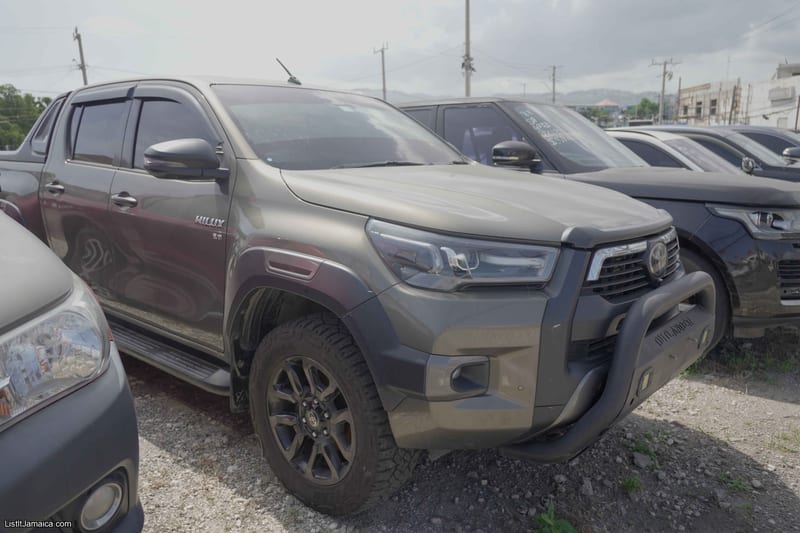
Repossessed Vehicles in Jamaica: How They Are Sold, and How List It Jamaica Is Digitizing the Process
Repossessed vehicles are one of the most searched car categories in Jamaica, and for good reason. They offer real value, often well below market price. Yet for most buyers and the institutions selling them, the process still runs on email, sealed envelopes, and word of mouth. This guide explains how repossessed vehicles are sold in Jamaica today, and how List It Jamaica is turning a slow, manual process into a single, transparent online marketplace.
What this guide covers
- What are repossessed vehicles?
- Why repossessions are rising in Jamaica
- How repossessed vehicles are sold today
- The problems with the current process
- How List It Jamaica digitizes and automates it
- What it means for banks and credit unions
- What it means for buyers
- Frequently asked questions
What are repossessed vehicles?
A repossessed vehicle is one that a bank, credit union, or finance company has reclaimed from a borrower who fell behind on a car loan or hire-purchase agreement. Once the vehicle is recovered, the lender needs to sell it to recover as much of the outstanding balance as possible. Any shortfall between the sale price and the loan balance is usually written off as a loss, which is exactly why institutions want the highest possible price at sale.
For buyers, this is the appeal: because the seller is a lender trying to recover a debt rather than a dealer chasing a margin, repossessed vehicles often sell below comparable private-sale prices, commonly in the range of 15 to 30 percent less, depending on demand and condition.
Why repossessions are rising in Jamaica
Vehicle repossessions have become far more visible over the past two years. According to Bank of Jamaica data reported by the Jamaica Gleaner, non-performing loans across the banking sector reached $45.3 billion by January 2026, up 20 percent year over year, with consumer loans, which include auto financing, making up about two-thirds of that total. Higher interest rates since the pandemic, rising living costs, and economic dislocation have all made it harder for some households to keep up with auto-loan payments.
The result is a steady stream of recovered vehicles hitting the market. In April 2026, NCB alone put 110 repossessed vehicles up for sale with a combined asking value of $437.3 million, ranging from budget wagons to luxury SUVs. Around the same period, JMMB listed 73 repossessed vehicles valued at roughly $250 million. Repossessed stock, in other words, is plentiful, valuable, and in constant demand.
- $45.3 billion in non-performing loans to January 2026, up 20% year over year.
- 110 vehicles in a single recent NCB sale, worth $437.3 million.
- 15 to 30 percent typical discount on repossessed vehicles versus private-sale prices.
How repossessed vehicles are sold in Jamaica today
Despite the value involved, the sale process across most institutions is still largely manual. Here is how it typically works.
Sealed bids and private treaty
Most banks and credit unions sell repossessed vehicles through a sealed-bid or private-treaty process. Interested buyers submit a written offer, usually by email or on a printed bid sheet, for a specific vehicle. Vehicles are sold strictly as is, where is, with no warranty, and only successful bidders are contacted. A winning bidder is generally given around five business days to complete payment, often by certified cheque.
Spread across many institutions
The bigger challenge is that every institution runs its own separate process. NCB sends offers to its Debt Collection and Recovery Unit. JMMB uses a dedicated private-treaty portal and its own bid sheet. Scotiabank, Sagicor, JN Bank, and credit unions like C&WJ each publish their own lists and bidding instructions, often pointing buyers to named recovery officers or realtors. To see what is available, a serious buyer has to track down and monitor a dozen different lists, email each institution separately, and ask to be added to notification lists so they hear about new stock before it is gone.
The problems with the current process
None of this is anyone's fault, it is simply how the process grew up. But the manual approach costs both sides real money.
For buyers, deals are hard to find, scattered across email chains and PDFs, and popular vehicles are often gone before most people even hear about them. There is little transparency on what others are offering, and no single place to search.
For institutions, a smaller, harder-to-reach pool of bidders means less competition on each vehicle, and less competition means weaker final prices on the very assets they need to recover value on. Add the manual paperwork, the notification lists, and the case-by-case settlement, and a great deal of staff time goes into every sale.
The core problem is reach and friction: fewer bidders, more manual work, and weaker prices, on assets where every extra percentage point of recovery matters.
How List It Jamaica digitizes and automates the process
List It Jamaica was built to solve exactly this. Instead of a dozen scattered email lists, it brings repossessed vehicles from partner institutions into one online marketplace, where buyers across the island and the diaspora can find, watch, and bid on them in real time.
One place, three ways to sell
Every vehicle can be sold in the way that suits it best. Live Auction lets buyers bid in real time and drives the price up on in-demand stock. Make Offer replicates the familiar sealed-bid approach, but online, letting the institution review and accept, decline, or counter each offer. Buy Now sets a fixed price for a fast, simple sale. One listing, one storefront, no email chains.
Automated auction events
For a batch of vehicles, an institution can run a single online auction event with a full catalogue of lots. Lots close one after another on a staggered schedule, just like a live saleroom, and a soft-close feature extends any lot that receives a late bid so genuine competition is protected. When the event ends, the platform automatically generates an invoice for each winning bidder, and unsold lots can be relisted instantly. The manual reconciliation disappears.
Serious bidders, honest prices
To keep bidding genuine, registered users pay a fee to bid. That small barrier screens out idle participants who would otherwise inflate prices on vehicles they never intend to buy, so final prices reflect real demand and winning bids are far more likely to complete.
Island-wide and diaspora reach
Because everything is online, an approved bidder can take part from any parish, or from overseas. That matters: hundreds of thousands of Jamaicans abroad buy vehicles for family back home, and reaching them widens competition on every lot. Listings are verified and shareable, posting straight to WhatsApp and Facebook in one tap, and the platform is already trusted by NCB.
Current process versus List It Jamaica
| The manual process today | With List It Jamaica |
|---|---|
| Listings scattered across a dozen bank emails and PDFs | One online marketplace for repossessed vehicles |
| Bids sent by email or paper sheet, one institution at a time | Live Auction, Make Offer, or Buy Now on every listing |
| Limited to whoever hears about the sale in time | Island-wide and diaspora bidders, in real time |
| Manual invoicing and case-by-case settlement | Automatic invoicing when the sale closes |
| Fewer bidders, weaker final prices | More competition, stronger recovery |
What it means for banks and credit unions
For the institutions selling repossessed vehicles, the benefit is simple: more bidders competing on each lot, and far less manual work per sale. Wider reach lifts final prices, which lifts recovery on non-performing loans. Automated cataloguing, bidding, and invoicing free up recovery teams from paperwork. And a verified, professional marketplace protects the institution's reputation on every sale. Institutions can register to list their repossessed inventory and start reaching more bidders right away.
What it means for buyers
For buyers, List It Jamaica removes the hardest part of buying a repossessed vehicle: finding one. Instead of chasing notification lists, buyers get one place to search, watch, and bid, with clear details and photos on each vehicle, transparent bidding, and the confidence of a verified marketplace. As always, repossessed vehicles are sold as is, so buyers should still inspect a vehicle, ideally with a mechanic, before bidding.
Frequently asked questions
How do I buy a repossessed car in Jamaica?
Repossessed cars are sold by banks and credit unions, usually through sealed bids submitted by email or on a bid form. Vehicles are sold as is, where is, and successful bidders are typically given about five business days to pay. On List It Jamaica, repossessed vehicles from partner institutions can be viewed and bid on in one place online.
Which banks sell repossessed cars in Jamaica?
Most major institutions do, including NCB, JMMB, Scotiabank, Sagicor, JN Bank, and credit unions such as C&WJ. Each runs its own separate listing and bidding process, which is why buyers often have to check many institutions at once.
How much cheaper are repossessed cars?
Repossessed vehicles often sell for around 15 to 30 percent below comparable private-sale prices, though the final figure depends on demand, condition, and the reserve set by the institution.
Are repossessed vehicles sold as is?
Yes. They are sold as is, where is, with no warranty. Buyers are responsible for inspecting the vehicle, ideally with a qualified mechanic, before bidding.
Can I find all repossessed vehicles in one place?
List It Jamaica is building a single online marketplace where repossessed vehicles from partner banks and credit unions can be browsed, watched, and bid on, instead of emailing each institution separately.
Find your next deal, or list your inventory
Buyers, browse repossessed and pre-owned vehicles from trusted institutions. Banks and credit unions, put your repossessed inventory in front of far more bidders.